
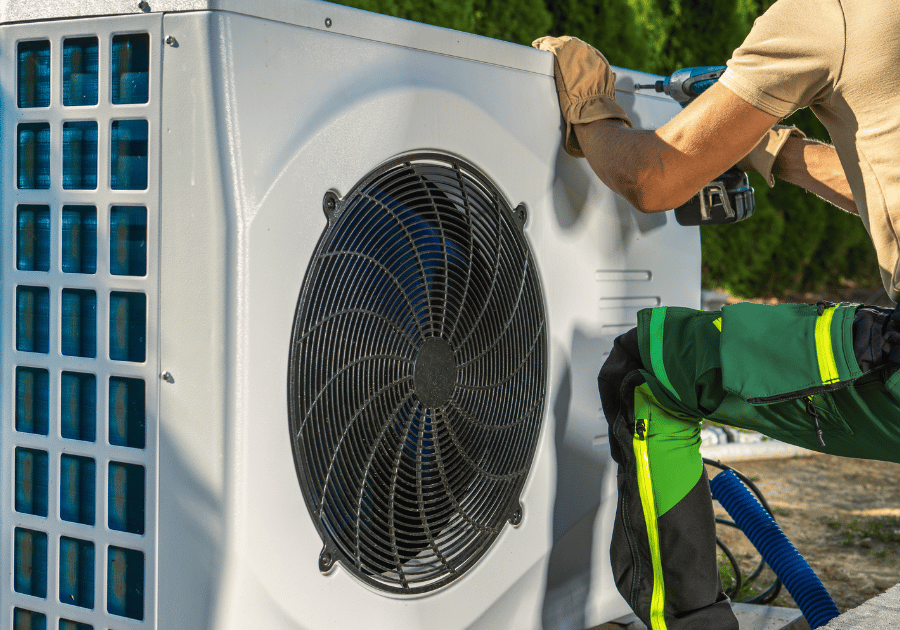
Heat pump repair, starting with whether anything is broken
Heat pumps do things in winter that look alarming and are completely normal. Steam off the outdoor unit, a layer of frost, a loud clunk, a blast of cool air, long run times in cold weather. A fair share of the calls we take turn out to be a system working exactly as designed, and we would rather tell you that than charge you to hear it.
Check before you book
Pick what your system is doing. If it is normal behavior we will say so and you can put the phone down.
Normal or fault
Based on how cold climate heat pumps are designed to behave. It narrows things down rather than replacing a visit.
Cold climate heat pumps are designed to run long and steady rather than in short bursts, which is why so much of what looks wrong is not. Anything involving burning smells, repeated breaker trips or water reaching electrical parts should be shut off and called in rather than investigated.
What is normal, and what is not
Worth knowing before the first cold snap, because the first winter with a heat pump is when most of these questions come up.
Normal winter behavior
- Steam coming off the outdoor unit. That is a defrost cycle melting frost off the coil. It looks like the unit is on fire and it is routine.
- A layer of frost on the coil that clears within roughly ten minutes.
- A loud clunk or whoosh as the reversing valve switches into defrost mode.
- Cooler air from the vents for a few minutes during defrost, since the system is briefly running in reverse.
- Long, continuous run times in cold weather. Heat pumps deliver lower output for longer rather than short blasts. Constant running is the design, not a symptom.
- Auxiliary heat coming on briefly during defrost or after a big thermostat setback.
Worth a service call
- Ice encasing the unit or ice that never clears between cycles.
- Auxiliary or emergency heat running constantly in mild weather. This one quietly costs you a fortune.
- Heats but will not cool, or cools but will not heat. Usually the reversing valve or its control.
- The outdoor fan not turning while the compressor runs.
- Grinding, screeching or metal on metal. Mechanical, and it gets worse with running time.
- Ice inside the cabinet or on the top of the unit, rather than on the coil face.
- Breaker tripping repeatedly. Stop resetting it and call.
The expensive one to miss. If auxiliary or emergency heat is running when it should not be, your heat pump is off and you are heating the house with electric resistance strips, which cost several times more to run. The tell is a bill that jumps sharply with no change in weather or habits. Nothing looks broken, the house is warm, and the meter is spinning. It is worth calling about even though nothing seems wrong.
The faults specific to heat pumps
A heat pump shares most of its parts with an air conditioner, so capacitors, contactors and fan motors fail the same way. These are the ones that belong to heat pumps alone.
- Defrost control failure. The board or sensor that decides when to run a defrost cycle. When it fails the coil ices over and stays iced, which is the single most common heat pump specific fault we see.
- Reversing valve faults. The component that flips the system between heating and cooling. A stuck valve or a failed solenoid produces the signature symptom of one mode working and the other not.
- Auxiliary heat locked on. Usually a control or sensor issue, sometimes a thermostat configured wrongly at installation. Expensive to run and easy to miss.
- Low refrigerant charge. Shows up worse in heating than in cooling, because heating is the harder job. A system that cooled acceptably all summer can be noticeably short of heat in January on the same charge.
- Outdoor sensor faults. Heat pumps make decisions based on outdoor temperature, so a bad sensor causes odd behavior that looks like several different problems at once.
- Drainage at the base pan. Defrost water needs somewhere to go. When it cannot drain it refreezes and builds up under the unit, eventually damaging the coil or the fan.
They fail in different places
Both are heat pumps, but the indoor half is a different machine, and so is the fault list.
- Ducted systems share the air handler and ductwork with the rest of the house, so airflow problems, filters and duct condition drive a lot of the symptoms. Auxiliary heat strips usually sit in the air handler, which is where the runaway electric bill originates.
- Ductless heads have their own blower wheel and condensate line per zone. Blocked drains and dirty blower wheels are the most common calls, and they present as water dripping from the head or a musty smell rather than as no heat.
- Multi-zone systems add a layer: one head misbehaving while the others are fine usually points at that head or its line, not at the outdoor unit.
- Ductless heads also hide their filters behind the front cover, and a lot of owners have never opened one. It is the first thing we check and often the whole answer.
If yours is a mini split, the same visit covers cooling as well, since the equipment is one system running in two directions. Our mini split page covers the installation side if you are also weighing replacement.
Hunter was quick and efficient. He explained everything to us and also let us know about the federal changes that could affect the future if we end up having issues with the coolant. Better to be forewarned than shocked later.
Debbie BrownGoogle reviewHeat pump repair questions
Tell us what it is doing
Whether it is ducted or ductless, what the outdoor unit looks like, and whether auxiliary heat is showing on the thermostat. If you have no heat right now, calling is faster.
Next steps and neighbors
Not sure whether it is broken?
Call and describe it. If it is normal heat pump behavior we will tell you that and you can get on with your day.