
Mini split installation for homes with no ductwork to work with
Mini split installation puts heating and cooling into rooms that ducts were never run to. For much of the housing stock around here, built with radiators or hot water baseboard, it is not the alternative option. It is the only sensible one.
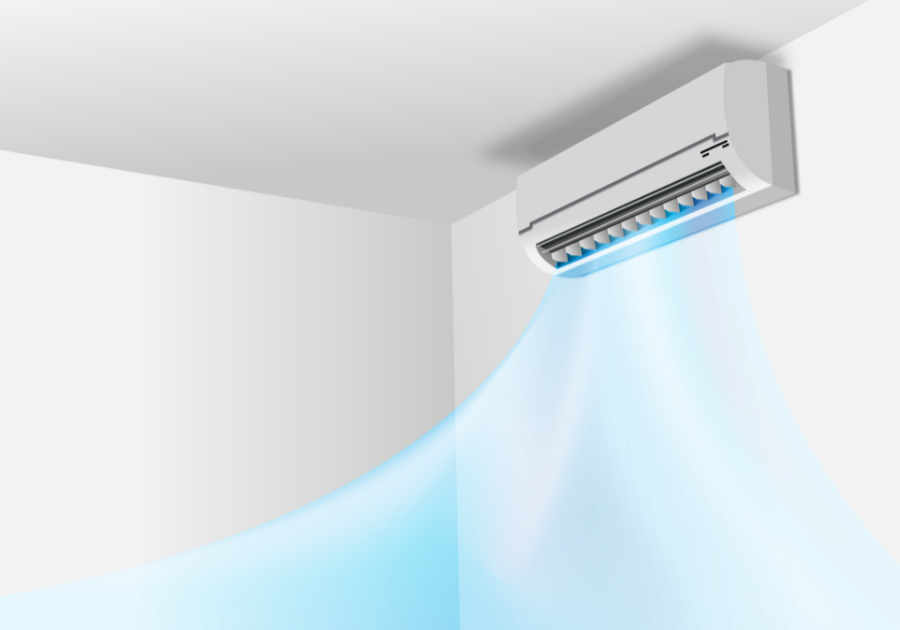 Wall mounted head, one zone
One outdoor unit, one head per room
A mini split is a heat pump without the ductwork. An outdoor compressor connects to indoor heads through a slim line set, usually a three inch hole through the wall rather than the framing surgery ducts require.
Each head has its own thermostat. That is the part people underestimate. You stop paying to heat and cool rooms nobody is in, and the bedroom nobody could ever get warm finally has its own control instead of fighting the rest of the house for airflow.
They heat as well as cool. Cold climate models hold usable output well below freezing, which is why they qualify for the same Energize CT and Mass Save heat pump rebates as any other heat pump installation.
What goes in
The rooms that always come up
Extending ductwork into a space that never had it is expensive, disruptive, and often underperforms once it is in. These are the situations where a head beats a duct run almost every time.
- Whole homes on baseboard or radiators. Enfield, Windsor, East Windsor and the older Hartford neighborhoods are full of houses with hot water heat and no ducts anywhere. A multi-zone system conditions the whole house without opening a single wall cavity for trunk lines.
- Additions and bump-outs. Tapping an existing system for a new room usually starves the rest of the house. A dedicated head does not.
- Finished attics and bonus rooms. The hardest room in any house to condition, and the one furthest from the air handler.
- Converted garages and workshops. Often uninsulated to begin with and always outside the original system's design.
- Sunrooms and three season porches. Glass loads that no central system was ever sized for.
- The one bedroom that is always wrong. Cheaper to solve with a single head than to rebalance a whole duct system that was never right.
How many heads does your house need
Zone count drives most of the project. Pick the spaces you want conditioned and see roughly what that looks like.
Zone planner
A rough guide, not a design. Final head count comes from a load calculation on the actual rooms.
Open plan living and dining often share one head. Small adjacent rooms sometimes do too. Very large or heavily glazed rooms occasionally need two. We sort that out on site rather than from a floor plan.
How the two actually compare
If your house already has sound ductwork, central is worth pricing. If it does not, the comparison is mostly settled before it starts.
| Ductless mini split | Central air | |
|---|---|---|
| Needs ductwork | No | Yes, sound and correctly sized |
| Heats as well | Yes, it is a heat pump | No, cooling only |
| Room by room control | Yes, each head is its own zone | No, one thermostat for the whole system |
| Install disruption | Low, a line set hole per head | High if ducts need running or rework |
| Conditioning empty rooms | Only what you switch on | Whole system runs at once |
| Indoor appearance | Visible heads on the wall or ceiling | Registers only |
| Rebate eligibility | Qualifies for heat pump rebates in both states | Cooling only, so not the heat pump tiers |
The honest version. The visible indoor head is the real tradeoff, and it is the one thing we will not talk you out of caring about. Some people never notice them after a week. Some never stop. If that is the sticking point and your ducts are in good shape, central air paired with your existing heat may suit you better, and we will say so.
What changes the price
Mini splits qualify as heat pumps
This is the part people miss. Because a mini split heats, it is eligible for the full heat pump rebate tiers in both states, not a smaller cooling incentive.
Connecticut pays its Energy Optimization rate per ton when the system displaces oil, propane, gas or electric resistance as primary heat, with an enhanced rate for baseboard replacement. Massachusetts pays its whole home rate per ton when the heat pump becomes the primary heat source, and a lower partial home rate when a backup system is retained.
Both require equipment on the state qualified product list and installation by a contractor registered in the Heat Pump Installer Network. We are registered in both. In Connecticut, using a contractor outside that network disqualifies the rebate entirely.
Current per-ton figures and a working estimator live on our heat pump installation page, and local project costs are broken down in our cost guide.
I would highly recommend Clean Climate HVAC. Tim Mahoney provided a quote very quickly. Scott and his crew were very professional and efficient. With respect for our home, you wouldn't even know his crew were here. The whole process went smoothly, from receiving a quote to the installation of the AC unit.
Laszlo SzaboGoogle reviewMini split installation questions
Tell us about the rooms
Which spaces are uncomfortable, what you heat with now, and roughly when you want it done. If it is urgent, calling is faster.
Next steps and neighbors
Let us look at the rooms
We walk the house, calculate the load room by room, lay out the zone options with prices, and tell you which rebate tier the project lands in before you commit to anything.