
Dual fuel systems, so the cheaper machine runs whenever it can
A dual fuel system pairs a heat pump with a furnace on one thermostat. The heat pump handles the long mild stretch that makes up most of a New England heating season, and the furnace takes over when it gets cold enough that burning fuel is the cheaper way to make heat. The changeover happens automatically, at a temperature we set to your actual rates.
See the handoff
Drag the temperature. This is what the system decides on your behalf, every hour, all winter.
The changeover point is an economic setting, not a fixed number. It depends on what you pay for electricity against what you pay for gas, oil or propane, and it moves when fuel prices move. Setting it correctly is the part that gets skipped, and a factory default can quietly cost you a whole season of savings.
The case for dual fuel is specific to places like this
Connecticut has some of the highest electricity rates in the country. That single fact is why the all-electric answer is less automatic here than it is in much of the US, and why dual fuel earns its place.
A cold climate heat pump keeps working below freezing, but its efficiency falls as the temperature drops. At some point on the way down, the cost of the electricity it uses passes the cost of the fuel a furnace would burn to make the same heat. Above that line the heat pump is cheaper. Below it the furnace is. A dual fuel system just knows where the line is and switches.
The other half of the case is capacity. Sizing a heat pump to cover a leaky older house at design temperature often means oversizing it for the other ninety percent of the winter, which is expensive to buy and worse to live with. Pairing it with a furnace lets you size the heat pump for the mild season, where it does most of the work, and let the furnace cover the extremes.
When dual fuel is the right answer
You already have ducts and a furnace with life left. Your house is older or leaky enough that a heat pump alone would need to be very large. You are on propane or oil and want to burn far less of it without removing the system entirely. Or you simply want a backup that does not depend on the same technology.
When it is the wrong answer
Your house is tight and well insulated, in which case a heat pump alone likely covers it and earns the larger rebate. You have no ductwork, which points at ductless. Or your furnace is at the end of its life anyway, in which case you are choosing between two full systems rather than adding to one.
Dual fuel and the one control that decides your rebate
This page matters more than any other in the silo for rebate purposes, because dual fuel is the definition of partial displacement, and partial displacement is exactly where homeowners lose money.
- Connecticut. Keeping the furnace means the old system is integrated rather than removed. That can still hold the Energy Optimization rate per ton, but only with a qualifying integrated control listed on the state product list. Without a listed control, a random inspection downgrades the project to the standard rate, which is a fraction of it.
- Massachusetts. The equivalent split is whole home against partial home. Retaining a backup system puts a dual fuel project in the partial home tier, at a lower per-ton rate with the same overall cap.
- The control is not optional. On a dual fuel install it is doing two jobs at once: managing the changeover economics and satisfying the rebate requirement. Both reasons point at the same short list of approved equipment.
- Installer network registration. In Connecticut, an installation by a contractor outside the Heat Pump Installer Network cannot claim the rebate regardless of what was installed. We are registered in both states.
Worth running the numbers on. Because the partial tier pays less, it is sometimes cheaper overall to remove the old system entirely and go with a heat pump alone, even though that is the bigger job. Whether that is true for your house depends on the envelope and on the per-ton difference. The estimator on the heat pump page shows both tiers, and we price it either way.
What actually goes in
Most dual fuel projects here are one of two shapes: adding a heat pump to a furnace that is staying, or replacing both at once so they are matched from the start.
- Cold climate outdoor unit. Sized for the mild season rather than for design day, since the furnace covers the extremes. This is where dual fuel saves money on equipment.
- Matched indoor coil. Sits on the furnace and shares the ductwork, so the same air handler serves both.
- Integrated control or communicating thermostat. The piece that reads outdoor temperature, applies the changeover point and locks out one system while the other runs.
- Duct and return assessment. A heat pump moves more air at lower temperatures than a furnace does, so ductwork that was adequate for heating alone sometimes needs attention.
- Commissioning both modes. Airflow, refrigerant charge, and the changeover behavior tested and documented rather than assumed.
Our own crews, in both states
Dual fuel is a controls job as much as an equipment job, which is why we do not subcontract it. The same people who size the system set the changeover point and commission both modes before leaving.
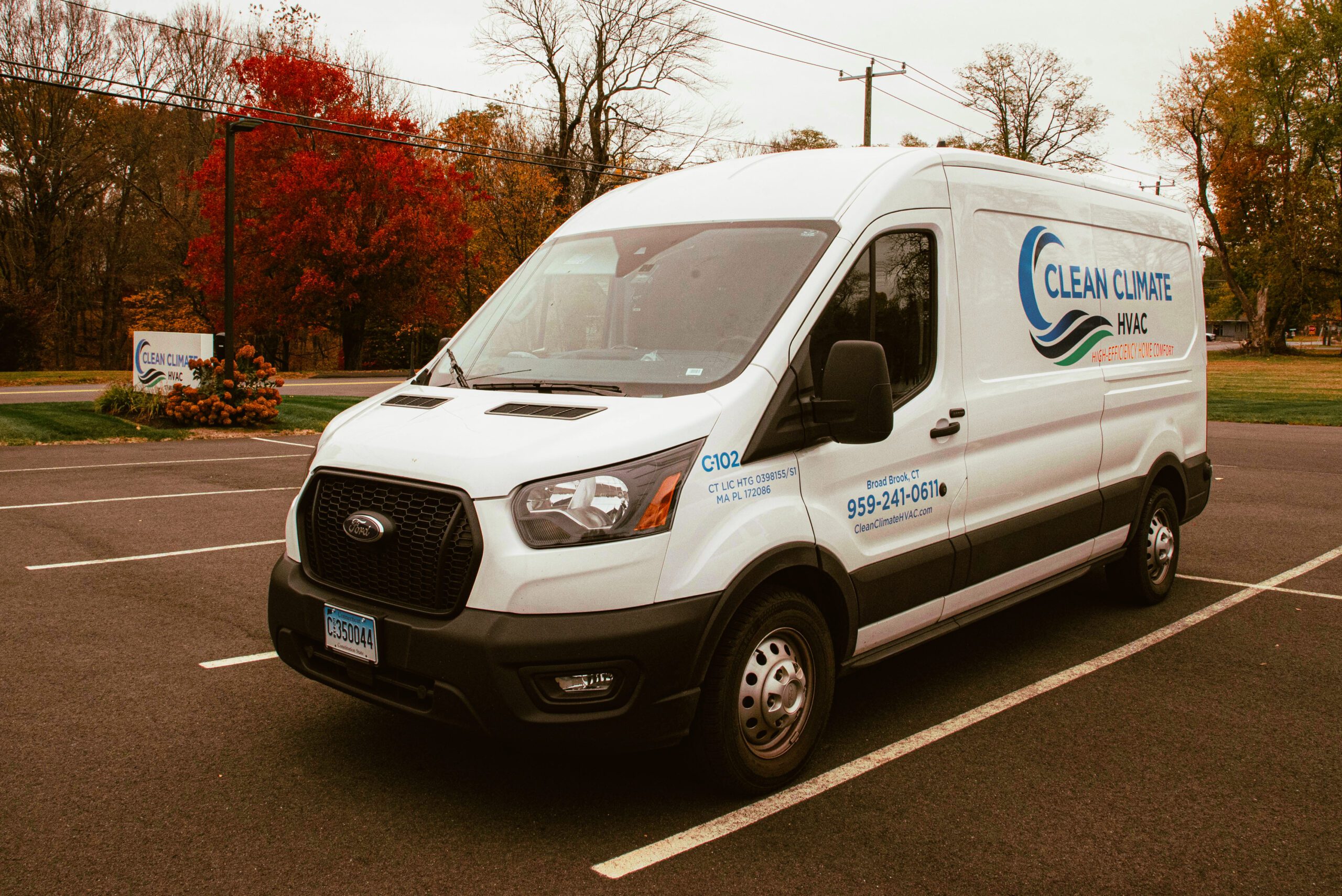
We work under Connecticut heating license HTG #0398155/S1 and Massachusetts plumbing license PL #172086, which is why one crew can cover the whole 50 mile radius from Broad Brook rather than handing you off at the state line.
Dual fuel questions
Tell us what you are working with
What you heat with, roughly how old the furnace is, and whether you have central air now. If you have no heat right now, calling is faster.
Next steps and neighbors
Find out where your changeover point sits
We calculate the load, work out the crossover from your real electricity and fuel rates, and price dual fuel against a heat pump alone so you can see what the rebate difference does to the comparison.